Overview
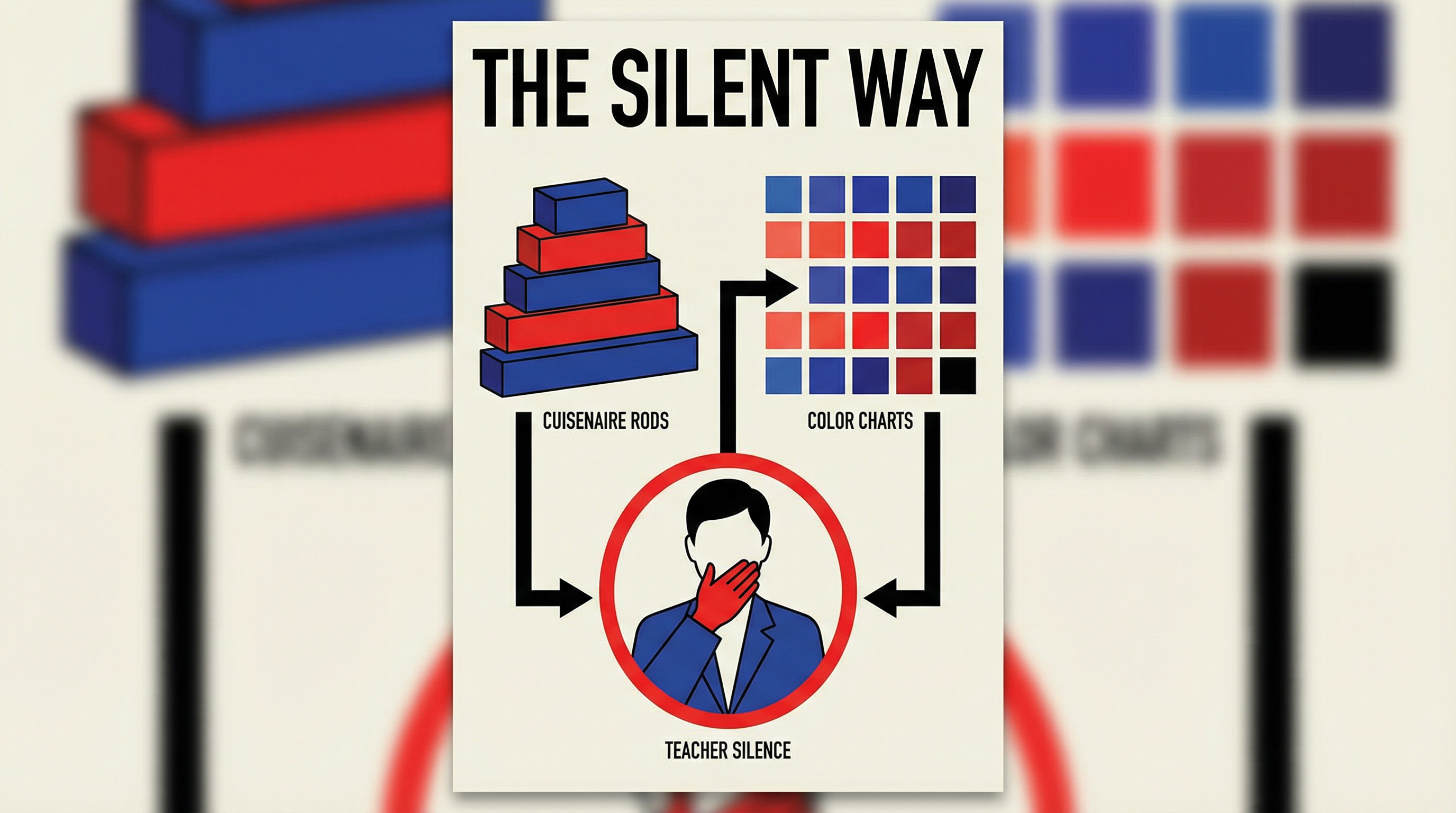
Developed by Caleb Gattegno, this method emphasizes learner autonomy. The teacher remains mostly silent, using props like Cuisenaire rods to guide students to discover language rules independently.
Key Principles (Interactive)
Principle 1
(Click to reveal)
Learner Autonomy: Students responsible for learning.
Principle 2
(Click to reveal)
Teacher Silence: Encourages student production.
Principle 3
(Click to reveal)
Problem-Solving: Language as a puzzle to solve.
Principle 4
(Click to reveal)
Physical Objects: Rods and charts represent language.
Principle 5
(Click to reveal)
Peer Correction: Students help each other.
Typical Activities
Using Cuisenaire rods for structures
Phonemic chart pointing
Peer correction
Self-correction practice
Scenario Challenge
Scenario Challenge
Situation:
"A student struggles to pronounce a new sound correctly."
Video Demonstration
The Silent Way approach to teaching pronunciation with Roslyn Young
Roles
Teacher's Role
Facilitator and guide providing minimal input.
Student's Role
Active explorer and problem-solver.
Further Reading